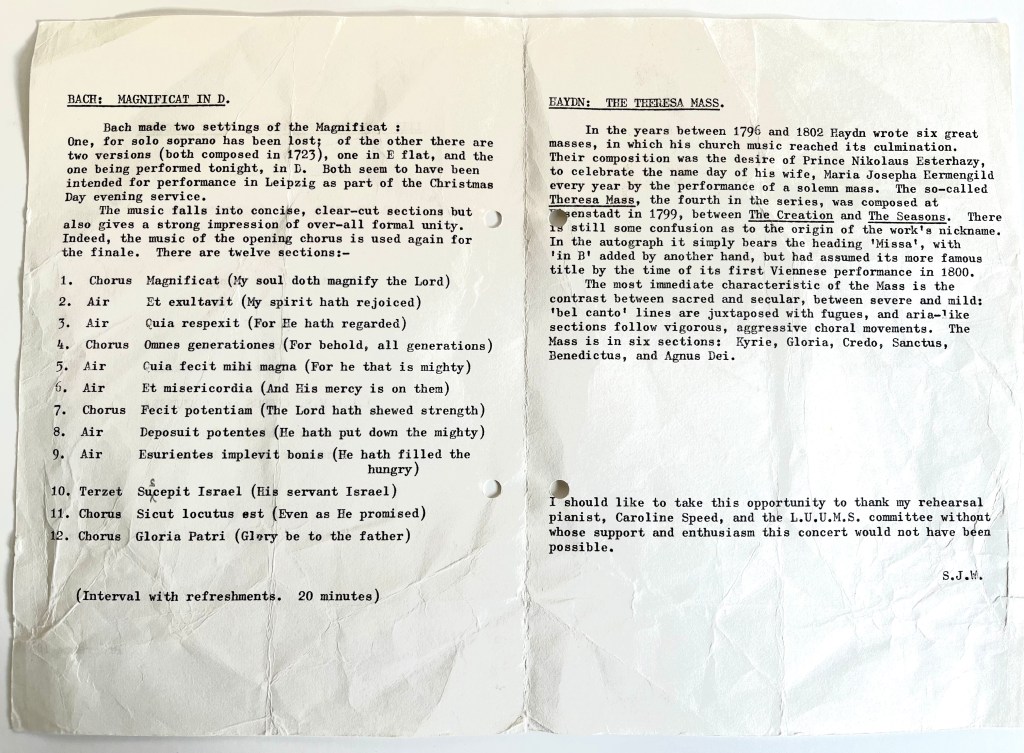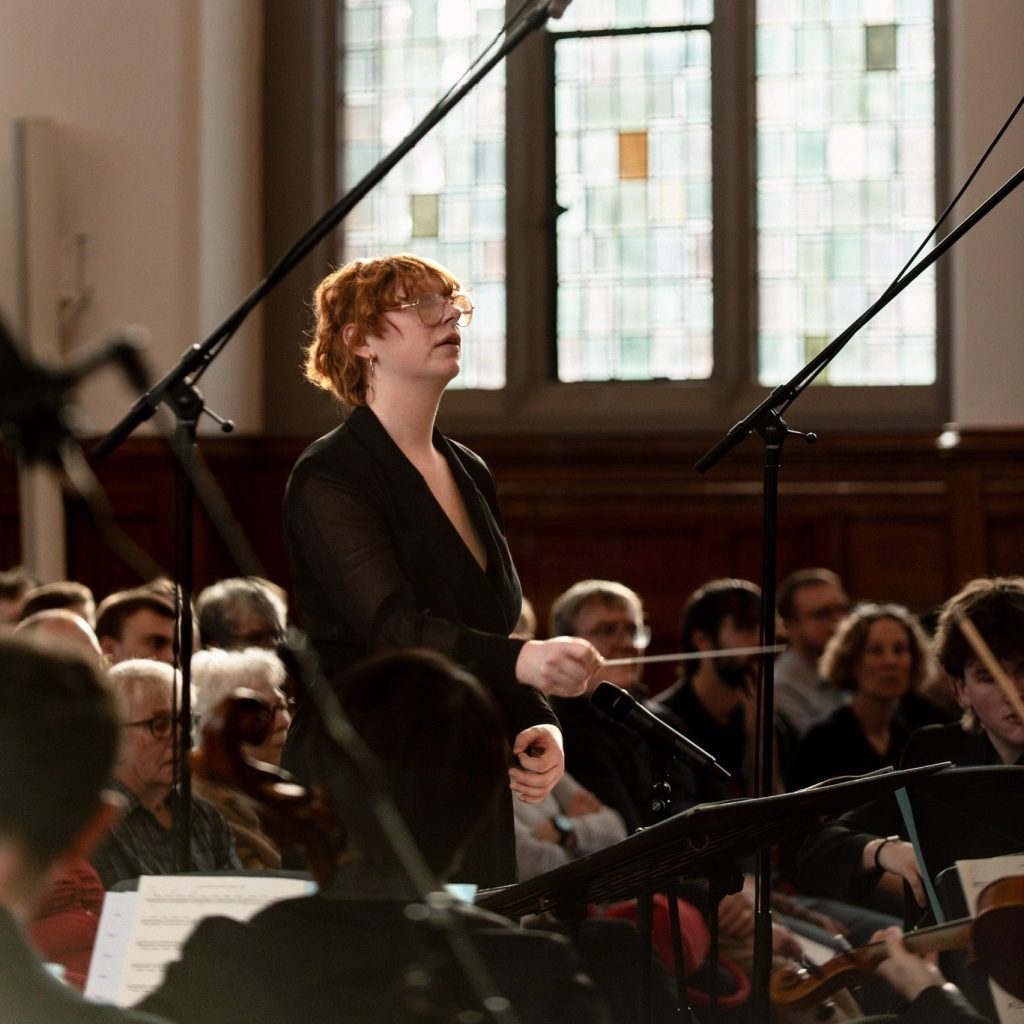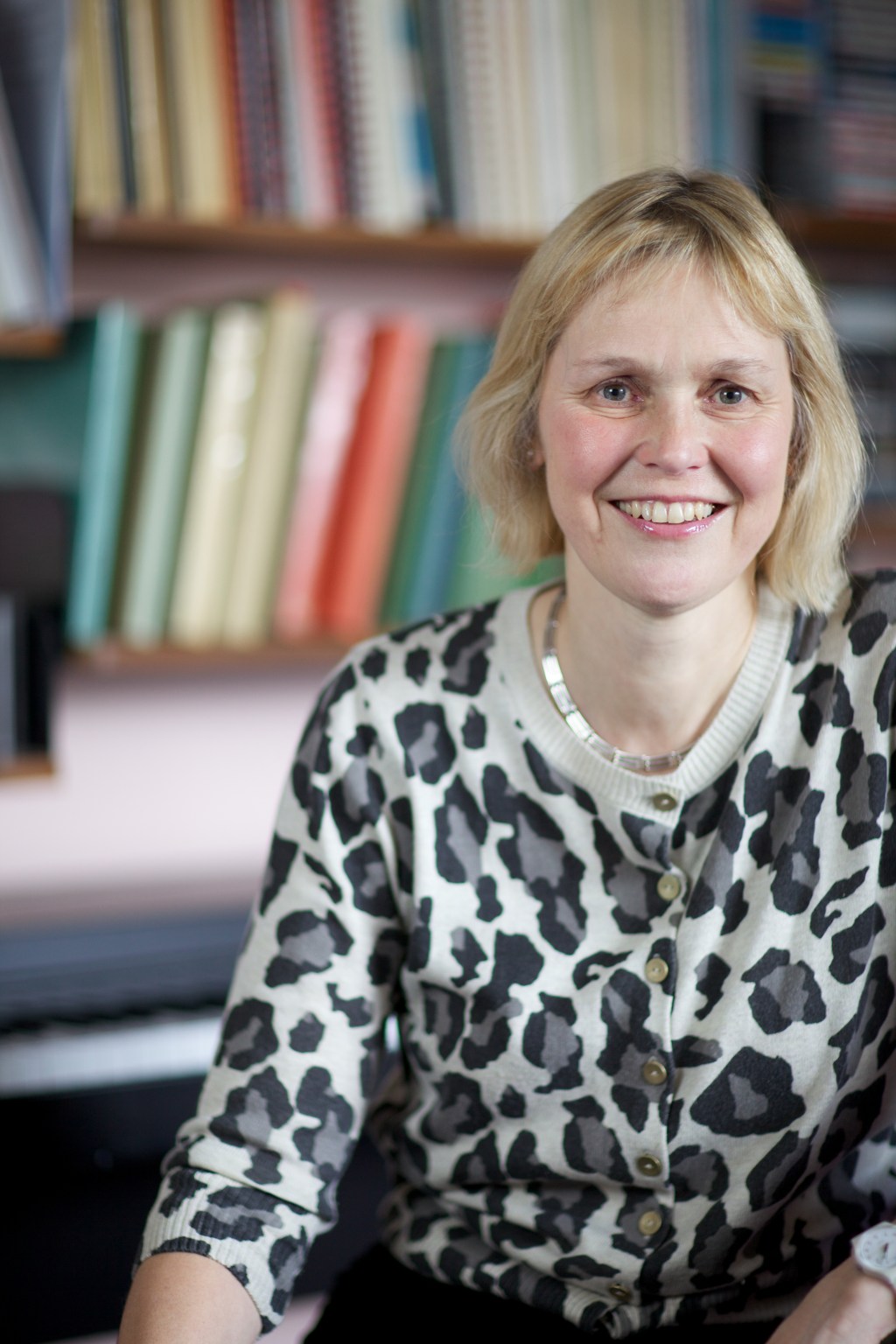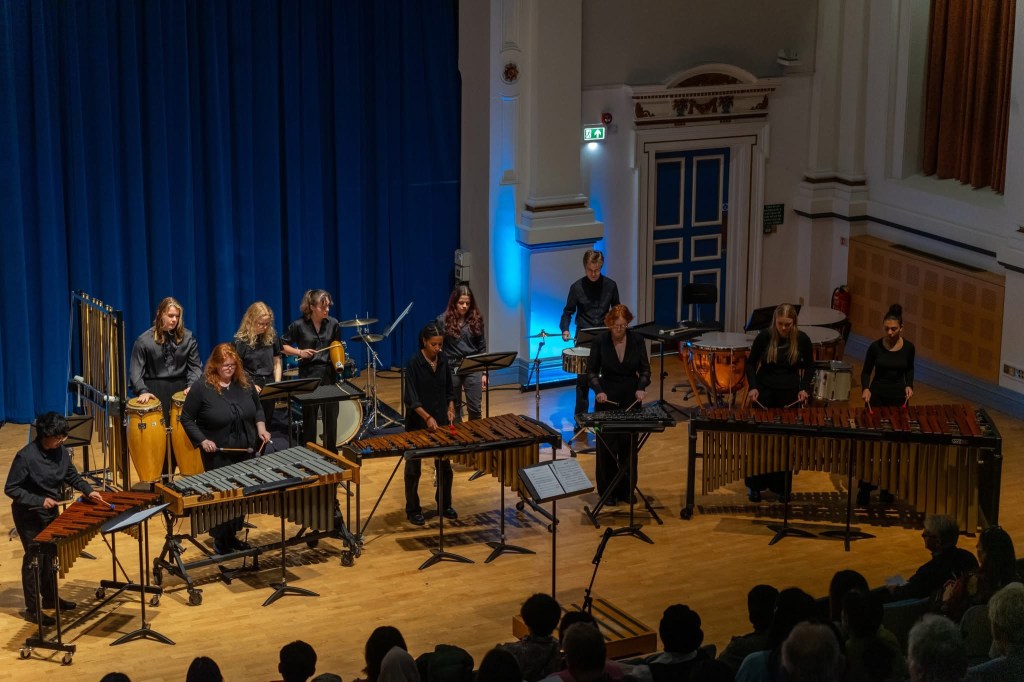
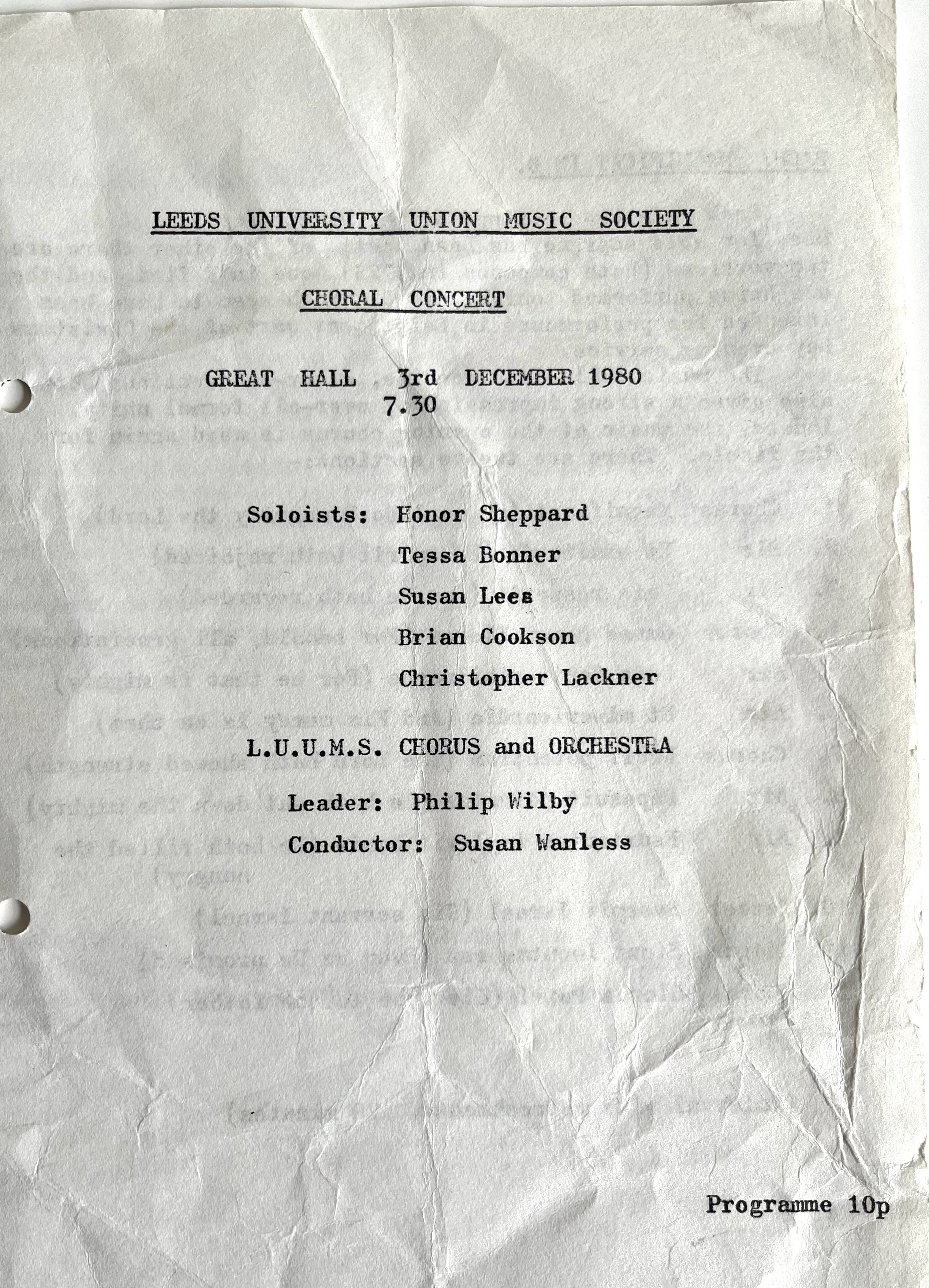
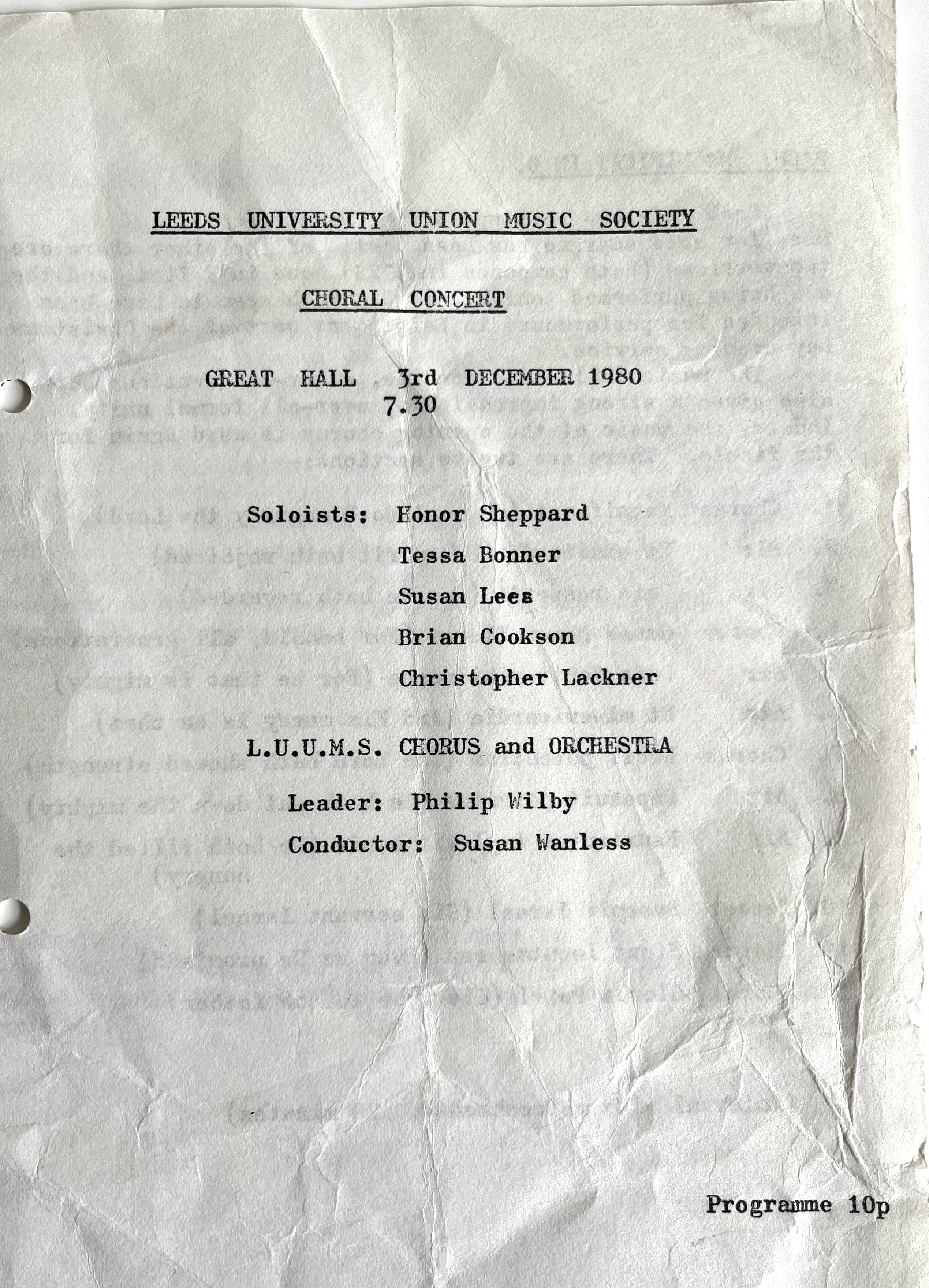
Dr. Susan Wanless conducted the LUUMS Symphony Orchestra and Chorus between 1980-1984.
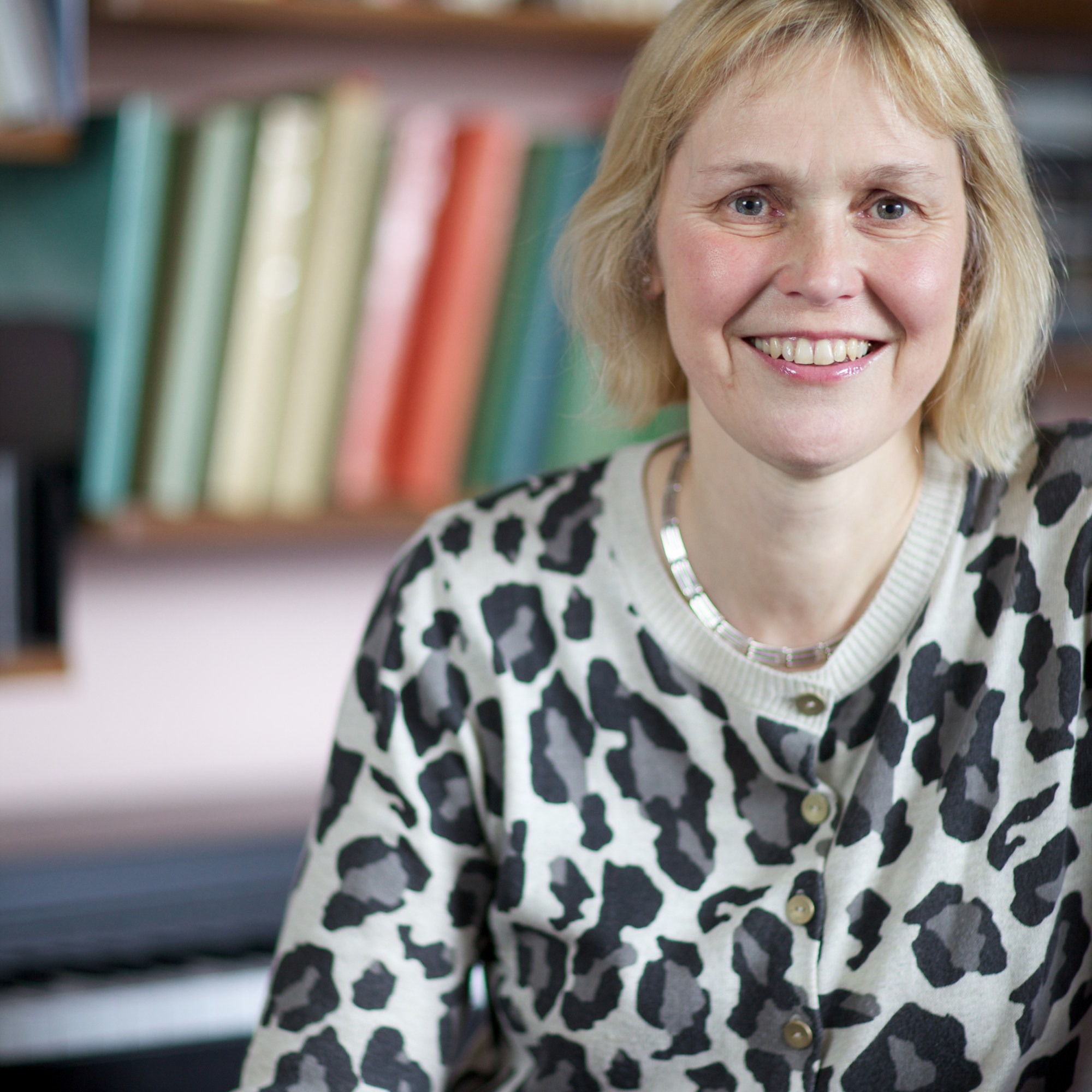
Susan came to the University of Leeds in 1974 to read Music and then did a further three years study there, researching leitmotif in the operas of Verdi. It was during this time that she took up conducting, collaborating in various Music Department projects and conducting the LUUMS Orchestra and Chorus from 1980 to 1984. Susan then stayed in Leeds, teaching at Leeds Grammar School and the University’s Department of Adult Education and conducting choirs and orchestras around Yorkshire including the Wakefield Festival Chorus and the Morley Choral Society.
In September 1987 she moved south to Canterbury to become the Director of Music at the University of Kent. She developed a programme of extra-curricular music-making for the students, staff and the local community, conducting the chorus, orchestra and other ensembles both on campus, in Canterbury Cathedral and across
the Channel. She also developed a successful Music Scholarship Scheme and, with a major donation from the Colyer-Fergusson Charitable Trust, oversaw the building of the University’s award-winning Concert Hall. Susan is now enjoying all the perks of retirement.
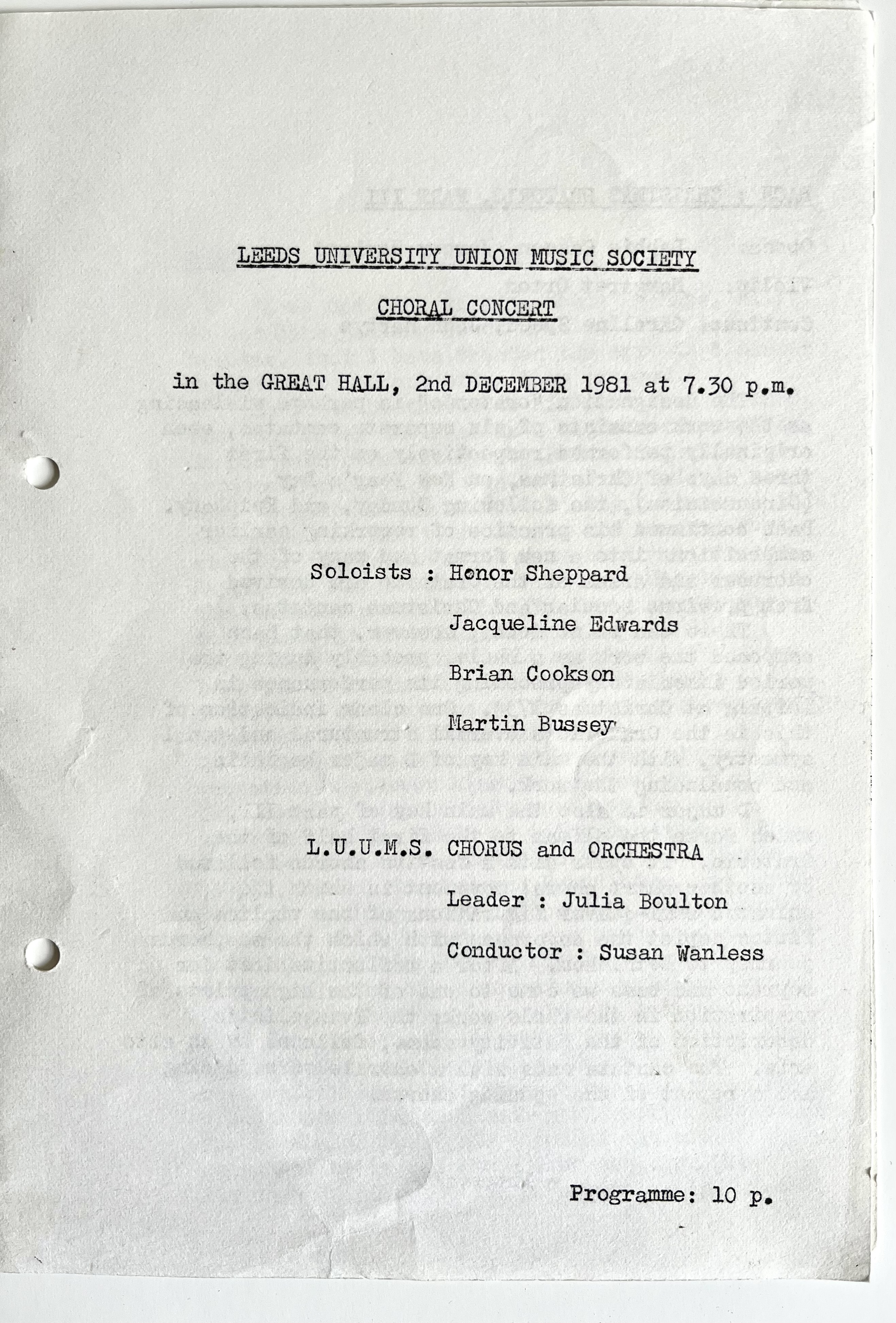
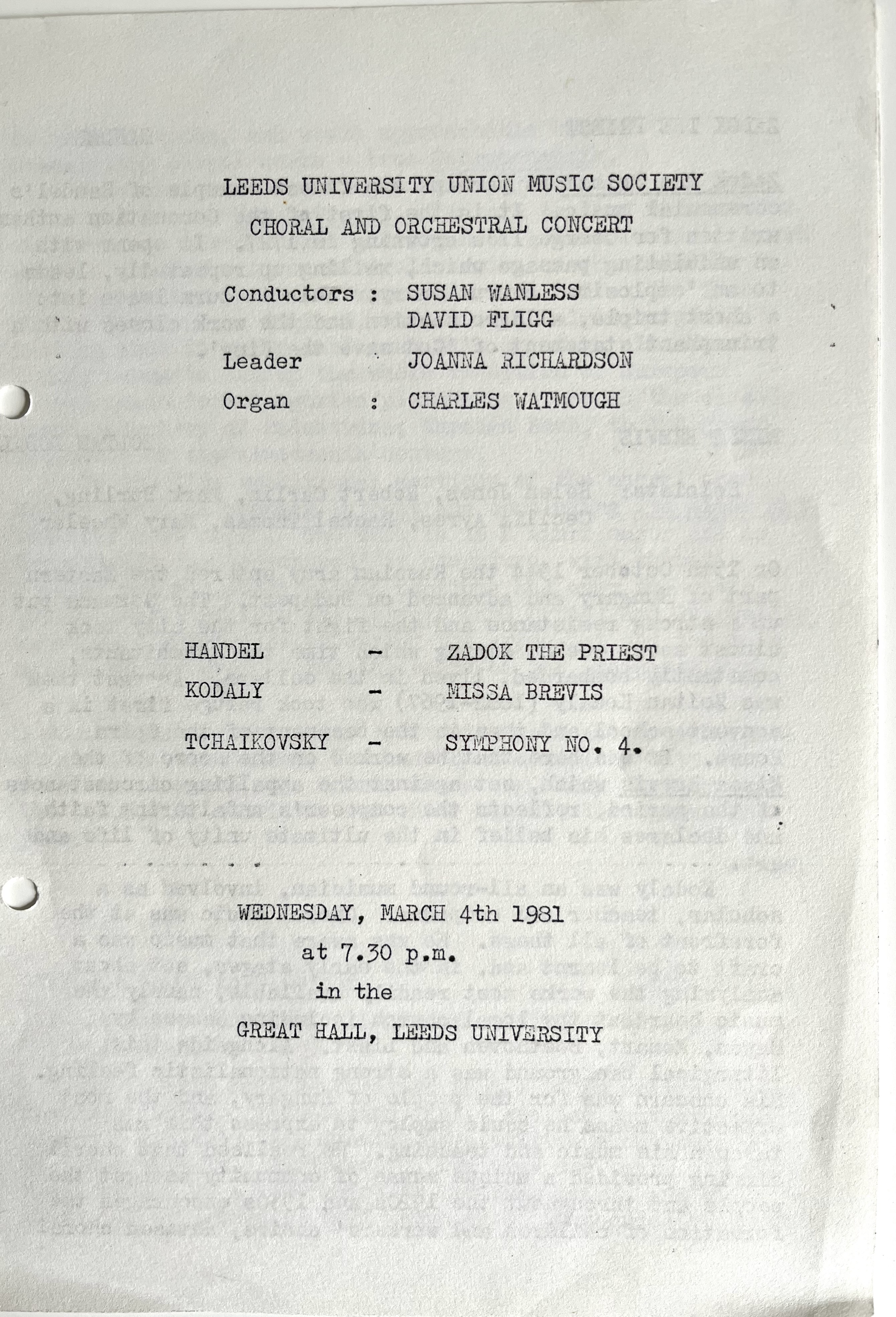
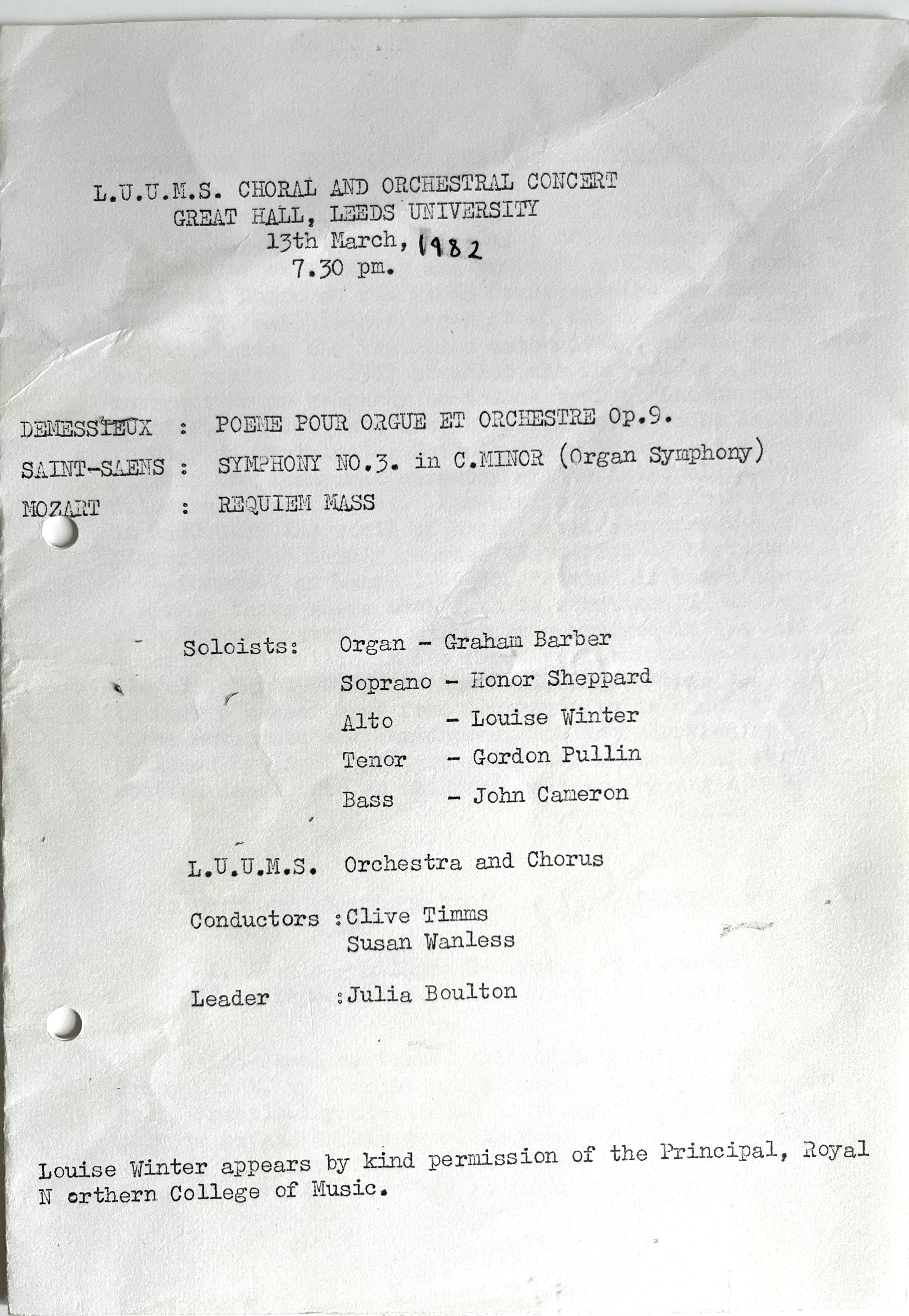
Can you share one key experience in your time with LUUMS that has shaped your musical career?
The LUUMS Orchestra and Chorus gave me my first opportunity to conduct. I had to learn very quickly as there is no pressure like standing in front of your fellow students! It gave me courage and self-confidence and taught me to devise interesting programmes, study all the scores and be very well prepared for what ever happened in a rehearsal or concert. And most importantly I think, I learnt that music- making should be constructive and challenging but also enjoyable and fun, especially when everyone is giving up their free time to participate.
Was there anything you learned in your work with LUUMS that was unexpected or surprising?
I think it was to discover just how many students from across the University were musicians and how talented they all were. The LUUMS Orchestra was made up of some extraordinary instrumentalists studying a whole range of subjects and competition for places was fierce.
What did the society look like when you were a member?
I imagine in many ways that the Committee and all the ensembles were quite like they are today, though we probably weren’t quite as adventurous with our programming, events and venues. I remember that most of the planning seemed to take place in the Students’ Union Building (then a rather sleezy place) over a coffee or pint. We had to be very hands-on with all the administration and publicity as photocopying, computers etc. were in their infancy.There was a great deal of legwork involved in distributing Society information and concert posters and flyers around the campus and halls of residence. And, of course, there was no social media to communicate and promote everything in those days – everyone had a pigeonhole not an email address. The one good thing was that there were no mobile phones going off in rehearsals and concerts!
What was your proudest achievement with the society?
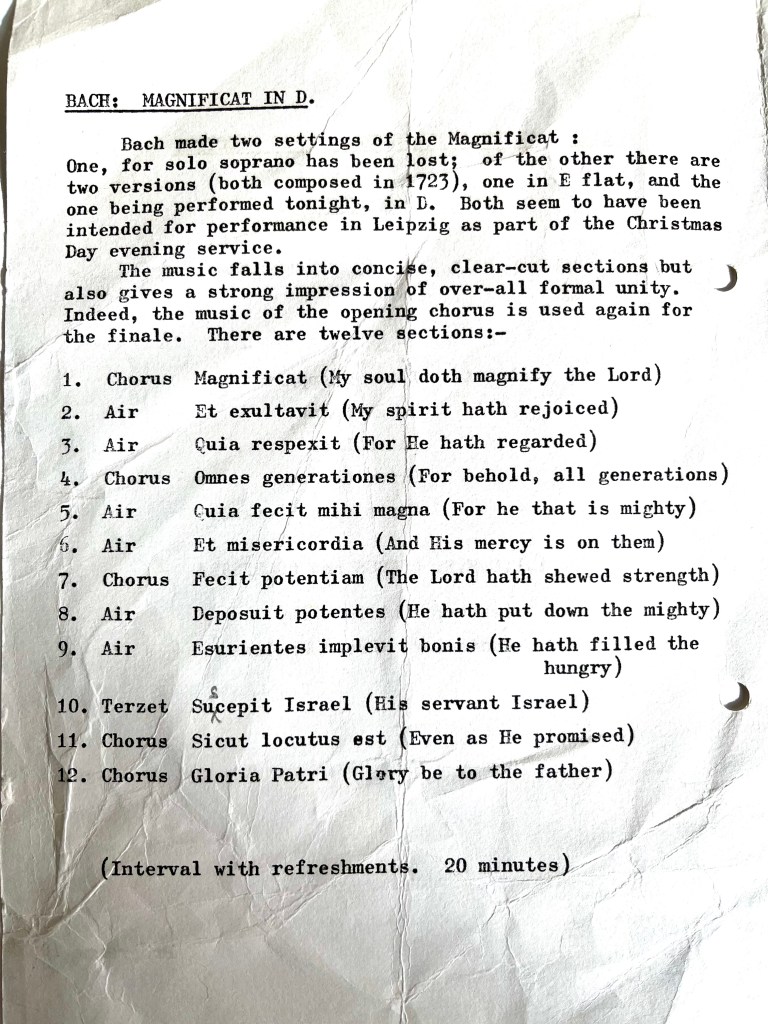
Looking back through old programmes, I feel proud to have rehearsed and performed some wonderful music. I was such a rookie conductor but LUUMS enabled me to tackle major works such as Mozart’s Requiem and Sibelius’s Fifth Symphony for the first time and work with professional soloists. Opera North had recently arrived in Leeds and one of the highlights was to have the chance to perform the Brahms Double Concerto with the orchestra’s leader and principle cellist.
What was your favourite memory with the society?
There are so many very happy memories of my time with LUUMS that it is hard to single one out. Some more challenging memories do come to mind such as the famous time when we pushed the Great Hall grand piano across the stage ready for a chorus rehearsal and one of the legs disappeared through a faulty floorboard!