
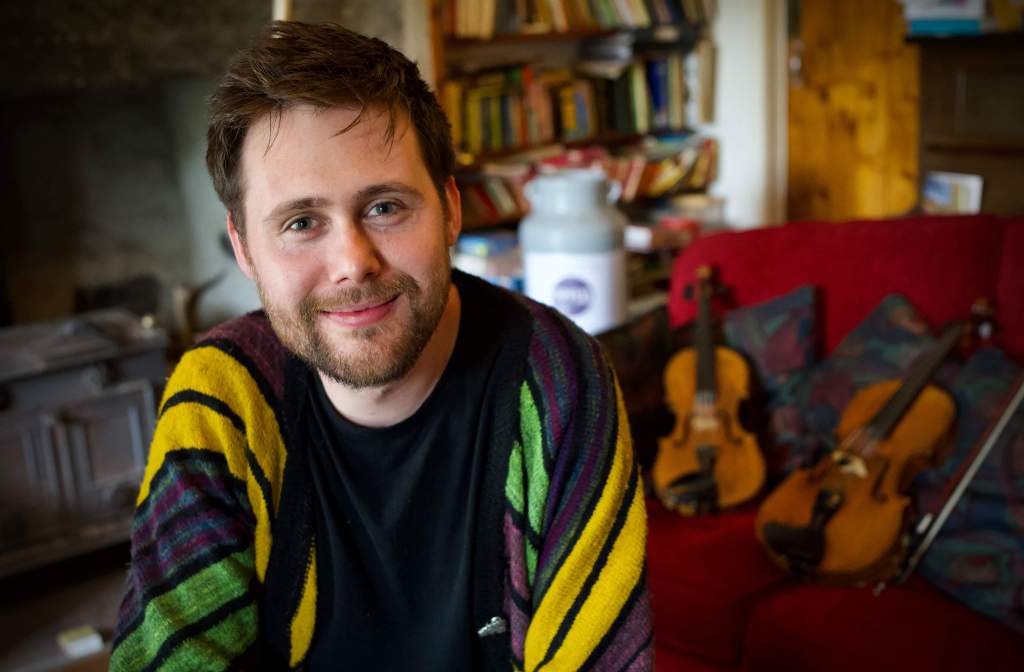
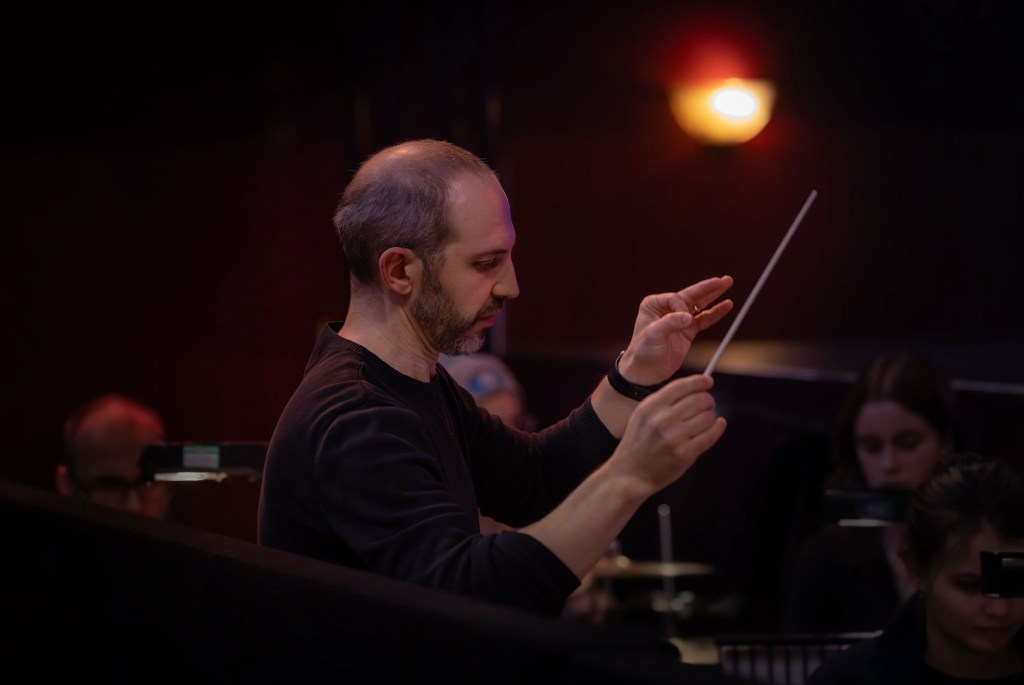
Patrick Rimes conducted the LUUMS Symphony Orchestra during while doing a BMus in Performance at the University of Leeds.
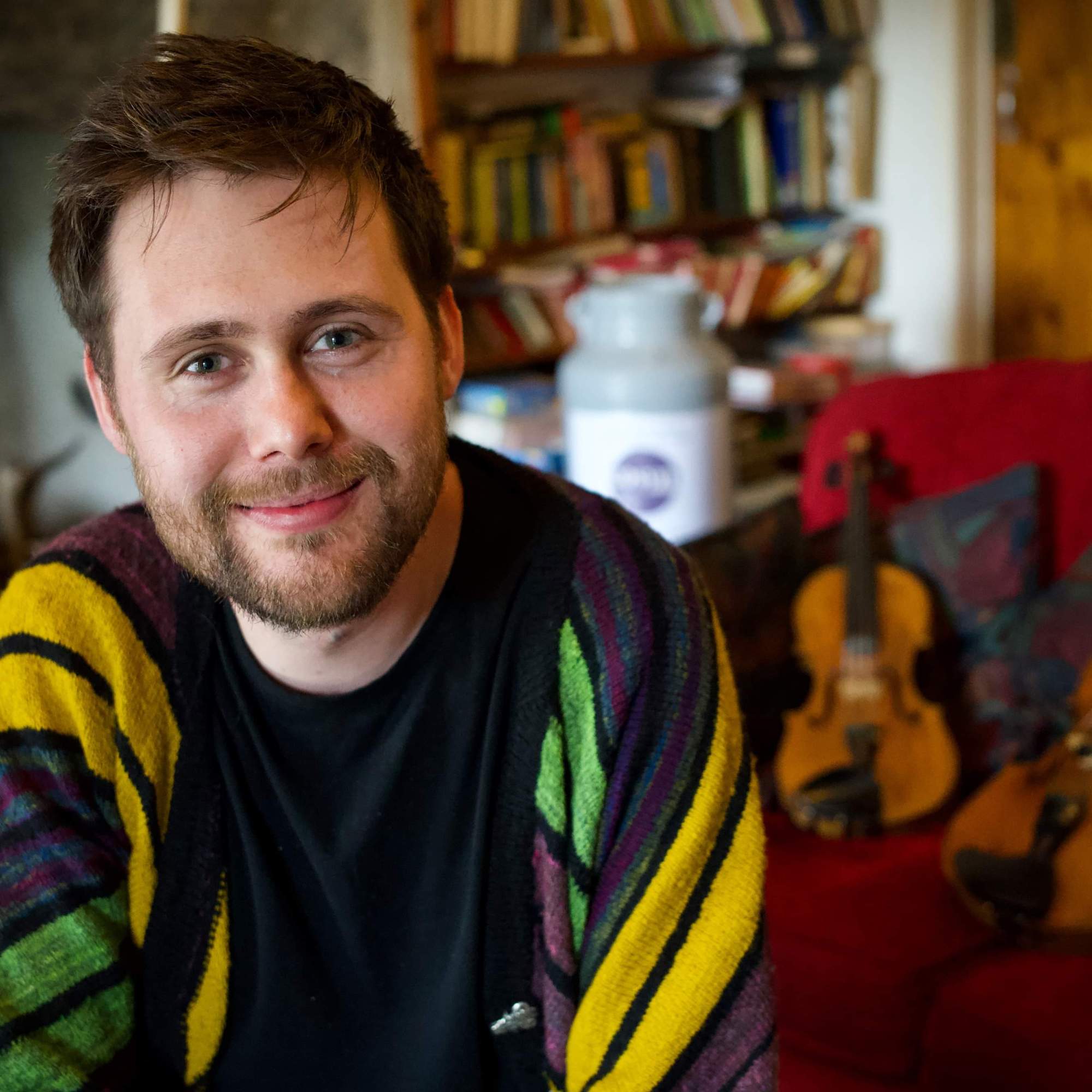
Photograph by Meinir Siencyn
Patrick Rimes is a musician, composer, arranger and educator from North Wales.
Born and raised in the thriving traditional music heartlands of Eryri, North Wales he went on to study classical violin and viola at Leeds University, Janáčkovo Akademie Muzických in Brno, Czech Republic and the Royal Welsh College of Music and Drama.
As a founder member of both Calan and VRï he has toured extensively in the UK, Europe and North America, and released multiple acclaimed studio albums. He has appeared as a soloist with the BBC National Orchestra of Wales, City of London Sinfonia and Sinfonia Cymru.
He is in demand as a composer/arranger, and his works have performed by artists as diverse as the Orchestre Symphonique de Bretagne, West Virginia Symphony, cellist Laura van der Heijden and Sting. His compositions have been played on Radio 2, 3 and 4, and in 2016 he won a BAFTA for a television programme with regular collaborator Bryn Terfel.
Despite crossing many genres, traditional music is always at the heart of his practice and as a teacher he enjoys sharing the joys of Welsh music with his students, at events such as Ffidil Fawr and at the Royal Welsh College of Music and Drama.
What encouraged you to pursue conducting with the Symphony Orchestra?
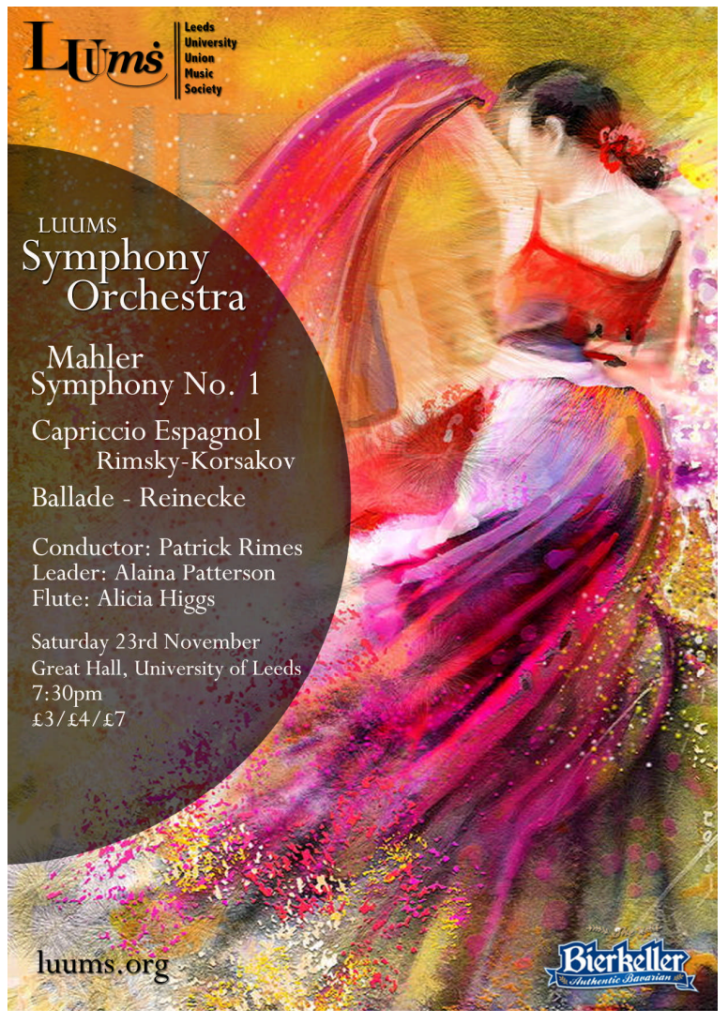
November 2013
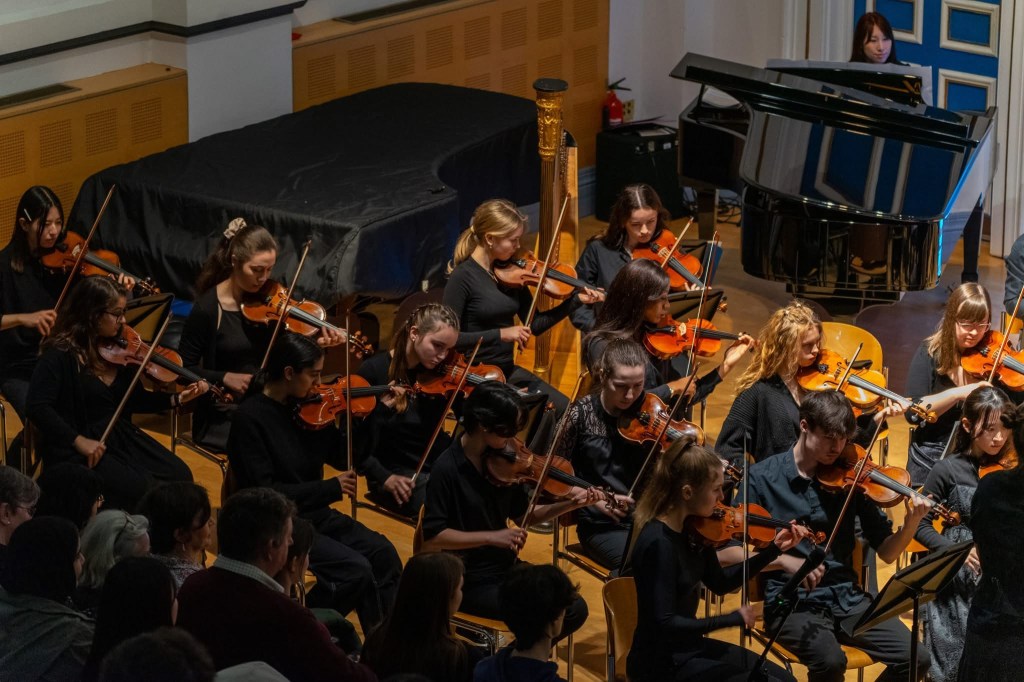
LUUMS Symphony Orchestra conducted by Patrick (programme cover)
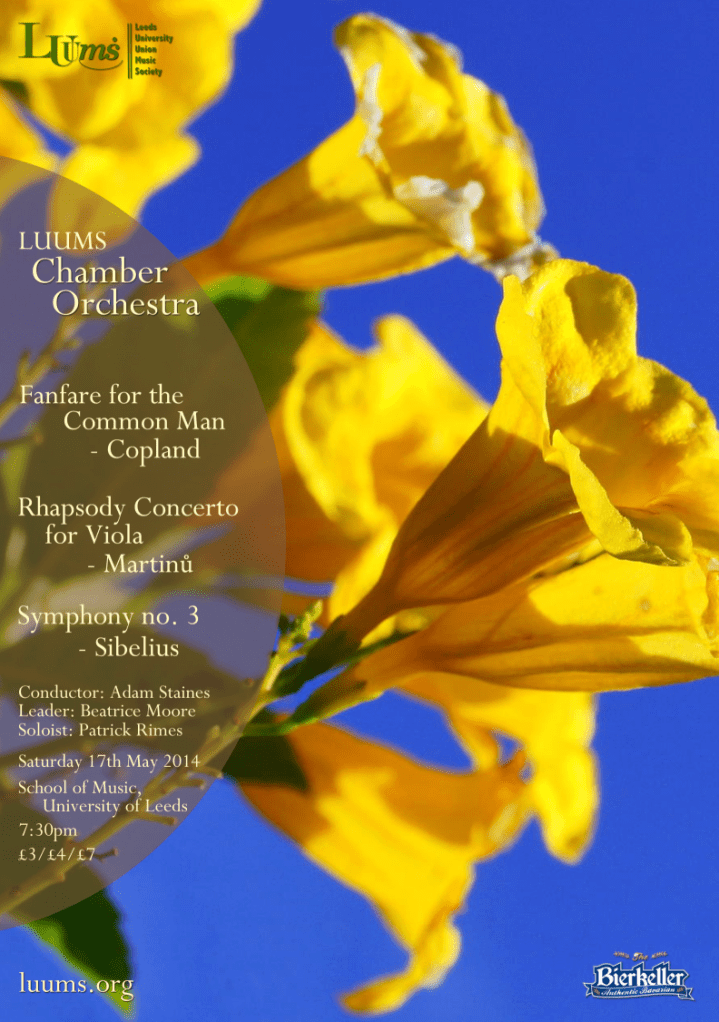
May 2014
LUUMS Chamber Orchestra featuring Patrick as a soloist (programme cover)
Can you describe your experience as a student in LUUMS?
“Actually LUUMS was one of the main reasons why I ended up at Leeds studying music. At that time, I had it in my head that I wanted to be a conductor. So I applied to various universities to study music with an emphasis on performance. I was a violinist that was in the process of being converted into a viola player. The fact that LUUMS existed and was entirely student directed, student run, student conducted was really, really attractive.“
The value of LUUMS as a student-led society
“Being a music student, I was doing project orchestras and departmental things. And the fact that they had a pool of 300-400 students to pick from… the union ensembles, an order of magnitude above that. So you had all these medics and people from other departments rocking up, who were incredible musicians, so the quality of some of those ensembles was fantastic. And you’re socialising with people from other walks of life as well as straight up music nerds like me.“
Getting started with Symph and key experiences that shaped your development
Getting started with the orchestra.
Did LUUMS have an impact on your folk music career?
Was there anything unexpected that you learned from your time in LUUMS?
Did you find yourself turning to your peers, managers, or fellow conductors for advice?
What was the most rewarding aspect of conducting Symph?
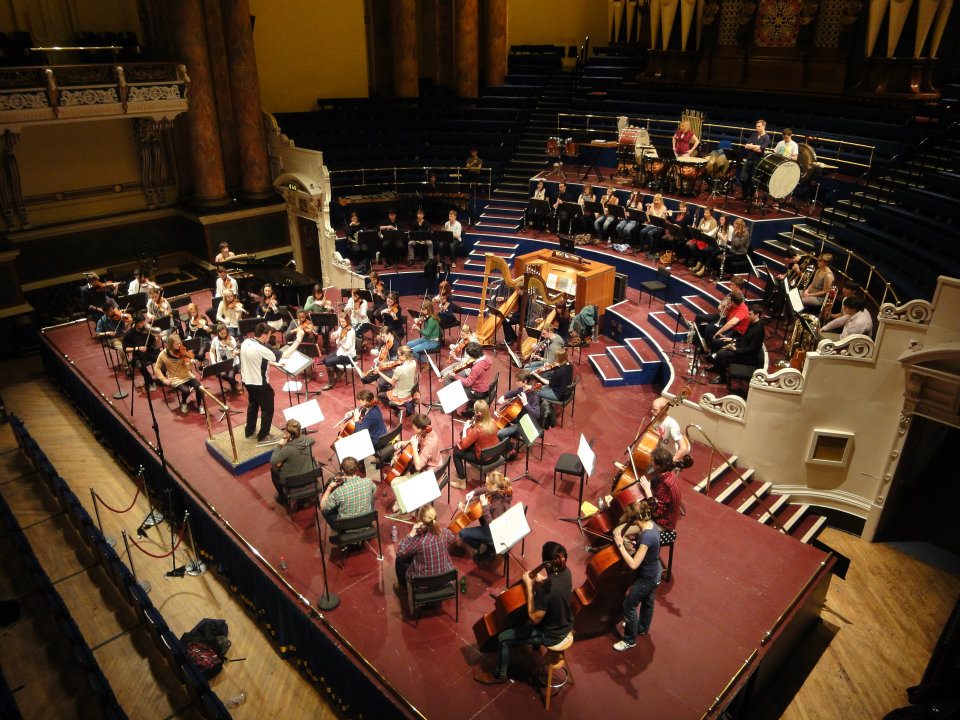
“It’s difficult to top doing the Leeds Town Hall. Particularly because it’s the place where we would go to concerts. We were pretty set on trying to go to see visiting orchestras as much as we could, it was pretty cheap to get in with a student card. So we saw some really great stuff at Leeds Town Hall, so to be able to have the opportunity to play in that amazing space… probably difficult to top that in terms of highlights.
We did a couple of foreign tours, Barcelona was one year and potentially somewhere in North France… they all kind of blur into one. But there was definitely a trip to Cologne, but I think I might’ve been playing on that rather than conducting.”
Finding a balance between independent creativity and collaboration
Fundraising and outreach projects with Symphony Orchestra
“We did an outreach project in that first year, I think it was a local youth music group who had a lot of really good young percussionists.
They did a little showcase, and then for the cannons in the 1812 overture, we had about 6 of them all dotted around the hall with a concert bass drum each, so it was sort of “surround sound cannoning” from them, which was a nice touch.
“In my final year, there was a sort of fundraising campaign with a local charity that involved doing a symphonic flash mob in a shopping centre in the middle of town. There was an orchestra set up, with a stand in front with a sign on it that said “come and conduct us!”.
We kind of acted like one of those statue performance buskers. We’d just be stood there and if somebody came up to us and put a pound in the jar and wave their arms, then everyone would sort of come to life and start playing!”


 Leeds University Union Music Society